


Introduction
Cryptocurrencies are becoming a normal part of conversations about money, technology, and investing. However, one common question appears again and again: where do you actually keep digital coins? Unlike paper money, crypto is not stored in your pocket or in a traditional bank account. This is where a crypto wallet becomes important. A clear understanding of wallets helps you use digital assets safely, avoid basic mistakes, and feel confident when sending or receiving coins.
For more detail on checking suspicious downloads and browser threats, this resource from antivirus-review.com is worth keeping handy.
In this beginner-friendly crypto wallet guide, you will learn what a crypto wallet is, how it works, and why it matters. You will also discover the different types of wallets, the setup process, key security steps, benefits, risks, and common mistakes to avoid. By the end, you will have a solid foundation to start using cryptocurrency wallets in a smart and responsible way. Whether you are just curious or already own coins, this guide is designed to walk you through the essentials in simple language.
What is a crypto wallet?
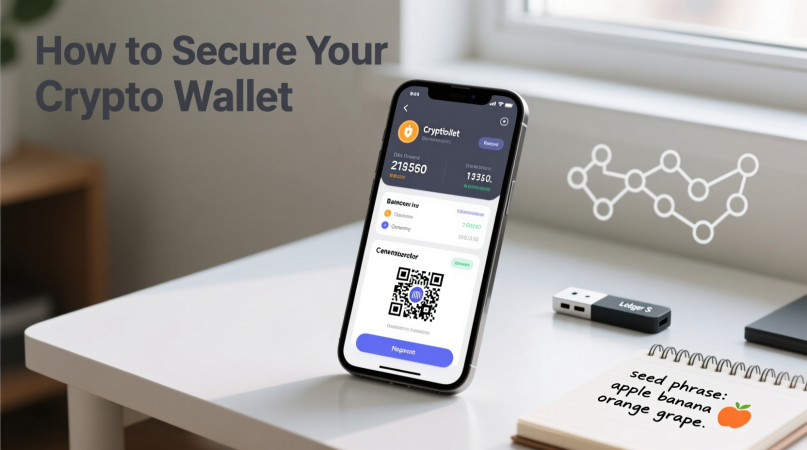
A crypto wallet is a digital tool that allows you to store, send, receive, and manage cryptocurrencies. It does not actually hold coins inside the device. Instead, it stores your private keys, which give you access to your crypto on the blockchain. These keys work like passwords that prove ownership of your funds.
There are two main parts of a crypto wallet. The first is the public address. This is similar to a bank account number and can be safely shared with others when you want to receive money. The second part is the private key. This must always stay secret because anyone with this key can control your coins. Losing it is similar to losing control of your entire balance.
Crypto wallets come in many forms, including mobile apps, desktop software, browser extensions, paper backups, and special hardware devices. All of them perform the same basic function but offer different levels of convenience and security.
May be you like it:
Crypto Investing for Beginners- Crypto Basics
Best Crypto Platforms- A Complete Guide for Beginners and Intermediate Traders
Crypto Tools Guide: The Ultimate Guide for Beginners
Why is a crypto wallet important?
A crypto wallet is important because it gives you personal control over your digital assets. Unlike money in a bank, cryptocurrency is not protected by central authorities. This means you are fully responsible for your coins. With the right wallet, you can manage your funds independently without relying on third parties.
Another reason wallets are important is security. Keeping coins on exchanges can be risky because platforms may face hacks, freezes, or technical issues. A personal wallet reduces reliance on these services and offers stronger protection when used correctly.
Finally, crypto wallets allow you to participate in the wider blockchain world. They let you connect to decentralized apps, send payments across borders, store NFTs, and interact with different networks. In short, they are your gateway to the digital asset ecosystem.
Step-by-step crypto wallet guide
Below is a detailed step-by-step crypto wallet guide that walks you from choosing a wallet to making your first transaction. Follow these steps carefully and do not rush the process.
Step 1: Choose the right type of wallet
Before creating a wallet, you should decide which type suits your needs. The main types include:
- Hardware wallets: physical devices that store keys offline
- Software wallets: apps for phones or computers
- Web wallets: browser-based wallets accessed online
- Paper wallets: printed keys stored physically
- Custodial wallets: wallets controlled by a service provider
Beginners usually start with mobile or web wallets because they are easy to use. However, people storing large amounts often prefer hardware wallets for extra security. Your choice depends on how much crypto you hold and how often you plan to use it.
Step 2: Download or buy your wallet
Once you select a wallet type, the next step is to install the app or purchase the device. Always use official sources to avoid fake applications. For software wallets, download from verified stores. For hardware wallets, buy directly from the manufacturer or trusted sellers.
After downloading or buying, follow the setup instructions provided. Most wallets will guide you through the process on the screen, making it easy even for beginners.
Step 3: Create your wallet and backup the recovery phrase
When you create a new wallet, you will receive a recovery phrase, often 12 or 24 random words. This phrase is extremely important. It is the master key to your wallet and can restore your funds if your phone is lost or damaged.
Write the phrase down on paper and store it in a safe place. Do not save screenshots or send photos of it. Never share it with anyone. If someone else gets access to your recovery phrase, they can take your crypto permanently.
Step 4: Secure your wallet
Security is a crucial part of any crypto wallet guide. After setting up your wallet, add extra protection. Use a strong password, enable two-factor authentication if available, and keep your device free from malware. Regularly update wallet apps to the latest version so you receive security fixes and improved features.
If you use a hardware wallet, store it somewhere safe and avoid showing it in public places. Treat it like valuable property.
Step 5: Receive cryptocurrency
To receive crypto, you need to share your wallet’s public address. This address is usually a long string of letters and numbers, sometimes shown as a QR code. Copy it carefully and double-check before sharing.
After someone sends coins to your address, the transaction will appear in your wallet after it is confirmed on the blockchain. Depending on the network, this may take a few seconds or several minutes.
Step 6: Send cryptocurrency
Sending crypto is simple but requires attention. Enter the recipient’s address, choose the amount, and confirm the transaction. Because blockchain transactions are irreversible, always verify the address and network before sending. A small mistake can result in permanent loss of funds.
You may also need to pay a network fee. This fee goes to blockchain validators, not the wallet provider, and is part of how the network operates.
Step 7: Monitor and manage your funds
Once your wallet is active, you can check balances, track transactions, and manage different cryptocurrencies. Many wallets let you add tokens, connect to decentralized apps, or stake assets. However, always research features before using them, especially if you are still learning.
Benefits of using a crypto wallet
Using a crypto wallet offers many advantages, including:
- Full control over your funds
- Ability to send and receive money globally
- Access to decentralized applications
- Support for multiple cryptocurrencies
- Stronger security compared to leaving funds on exchanges
- Independence from banks and middlemen
- Easy portfolio tracking in one place
- Simple backups through recovery phrases
These benefits make wallets essential tools for anyone involved in digital currencies.
Disadvantages and risks of crypto wallets
Although crypto wallets are useful, they also involve risks you must understand:
- Loss of private keys means permanent loss of funds
- Hacking risks if devices are infected with malware
- Phishing scams that trick users into sharing recovery phrases
- Fake wallet apps that steal information
- Human error when sending to the wrong address
- Hardware loss or damage without a backup
- Overconfidence leading to careless security habits
Being aware of these risks helps you take careful steps to protect your assets.
Common mistakes to avoid with crypto wallets
Beginners often repeat the same mistakes. Avoid the following:
- Sharing recovery phrases or private keys with others
- Storing seed phrases as screenshots or in email
- Leaving large amounts of crypto on exchanges
- Downloading wallets from unverified websites
- Ignoring software updates
- Using simple passwords
- Sending funds without checking the network or address
- Forgetting to create backups
Learning from these mistakes will save you stress, time, and money.
May be you like it:
Crypto Trading Tutorial- A Complete Guide for Beginners
Buy Bitcoin Step by Step- A Complete Beginner’s Guide
Crypto How To Guide- A Complete Beginner’s Guide to Getting Started
Frequently asked questions
1. Is a crypto wallet free to use?
Many crypto wallets are free to download and use. However, you still need to pay network transaction fees when sending crypto. These fees are not charged by the wallet but by the blockchain network itself.
2. Can I have more than one crypto wallet?
Yes, you can create multiple wallets. Some people keep a daily-use wallet for small transactions and another secure wallet for long-term storage. Managing more than one wallet can increase safety when done correctly.
3. What happens if I lose my phone?
If your phone is lost or damaged, you can restore your wallet on a new device using the recovery phrase. This is why backing up the phrase safely is so important. Without it, your funds cannot be recovered.
4. Are hardware wallets safer?
Hardware wallets are considered one of the safest options because your keys remain offline. However, they must still be protected from physical loss, damage, or theft. Safety depends on both the device and your personal habits.
5. Can a crypto wallet be hacked?
A wallet app itself is hard to hack, but users can still be targeted through viruses, phishing links, or fake websites. Using strong security practices greatly lowers this risk.
6. Do I need a crypto wallet to buy cryptocurrency?
Some exchanges let you buy crypto and keep it on their platform, but using your own wallet gives you true ownership. Many people move coins from exchanges into personal wallets for better control and security.
Expert tips and bonus points
To get the most from this crypto wallet guide, keep these expert-level tips in mind:
- Treat your recovery phrase like gold and never type it on unknown websites
- Separate long-term holdings from spending wallets
- Test transactions with small amounts first
- Keep learning about updates in the crypto world
- Avoid discussing the size of your holdings publicly
- Create strong and unique passwords
- Consider using a password manager for safety
- Stay calm and double-check details before sending funds
- Remember that patience is part of safe crypto use
Following these suggestions will greatly improve your overall wallet experience.
Conclusion
A crypto wallet is your personal doorway into the world of digital currencies. It gives you ownership, flexibility, and freedom to manage your assets without relying completely on banks or centralized platforms. At the same time, it places responsibility in your hands. You must protect your private keys, store recovery phrases carefully, and avoid careless actions.
This crypto wallet guide has explained what wallets are, why they matter, and how to use them through clear steps and practical examples. You learned about benefits, risks, common mistakes, and expert tips for safer use. With this knowledge, you are better prepared to start your journey with confidence.
As you continue exploring cryptocurrencies, always remember that education and patience are the strongest tools you have. Move slowly, make thoughtful decisions, and treat security as your top priority. When used wisely, a crypto wallet can open new financial opportunities and help you take full advantage of the growing digital economy.
Types of crypto wallets explained in detail
To make this crypto wallet guide more complete, it is helpful to look closely at the main categories of wallets. Even though they share the same goal, each type serves a slightly different user.
Hardware wallets
Hardware wallets are small electronic devices that store private keys offline. Because they are not always connected to the internet, they are less exposed to online attacks. People often compare them to safes for digital assets. They are best for users who want long-term storage and do not need to move coins every day.
Software wallets
Software wallets are applications you install on your phone or computer. They are convenient, easy to access, and popular among beginners. Within this group, there are mobile wallets, desktop wallets, and browser extension wallets that work with many decentralized platforms. Since they stay online, extra care must be taken with passwords and device security.
Web wallets
Web wallets run inside a browser and can be accessed from almost any device. They are simple to use and require no installation. However, because they depend on online services, they come with additional trust and security considerations. Users should always verify the website before logging in.
Custodial vs non-custodial wallets
Another way wallets are classified is by who controls the private keys. In custodial wallets, a company manages the keys for you. This feels similar to using an online bank account. In non-custodial wallets, you are fully in control of the keys and, therefore, your crypto. Many people prefer non-custodial wallets because they align with the core idea of cryptocurrency ownership.
How a crypto wallet actually works
Understanding how wallets work behind the scenes can remove confusion. A wallet does not store coins in the device. Instead, coins live on the blockchain. The wallet simply interacts with the network and proves that you are the owner of specific addresses. This proof happens through cryptography, using public and private keys that are mathematically linked.
When you send crypto, the wallet creates a digital signature using your private key. The network checks this signature with your public key to confirm that the transaction is valid. Because of this design, you never have to reveal your private key during normal use, which keeps it secure as long as you handle it carefully.
Security best practices for crypto wallets
Security should always be part of your daily routine when using digital assets. Simple habits can prevent major losses.
- Keep recovery phrases offline
- Avoid public Wi-Fi when managing wallets
- Lock your phone or computer with strong authentication
- Do not install unknown browser extensions
- Be cautious of messages promising giveaways or urgent requests
- Verify addresses by copying and pasting, not typing manually
- Double-check network names such as Bitcoin, Ethereum, or other chains
Practicing these habits over time turns them into automatic behavior and lowers your risk significantly.
Real-life examples of crypto wallet use
People use crypto wallets for many purposes today. Some send money to family members in other countries without relying on banks. Others store savings in digital form as a long-term investment. Freelancers may accept payments in cryptocurrency because it is fast and works across borders. Gamers use wallets to hold in-game assets and tokens. These examples show that wallets are not just technical tools, but practical instruments used in daily financial life.
Signs of a trustworthy crypto wallet
Because many wallet options exist, choosing wisely is essential. A trustworthy wallet usually has transparent documentation, open communication from the development team, regular updates, and a clear security history. It should also allow you to control your private keys in non-custodial mode. Reading independent reviews and learning from the community can help you decide, while still applying your own judgment.
Future of crypto wallets
The future of wallets is exciting. Developers are working on easier recovery systems, improved user interfaces, and stronger security that does not feel complicated. We may also see wallets becoming digital identity tools that help people log in to platforms without traditional passwords. As adoption grows, wallets will likely become simpler, more intuitive, and deeply connected to many online services.
Additional FAQ for deeper understanding
7. Can I recover funds without a recovery phrase?
No. The recovery phrase is the only universal key to your wallet. Support teams or companies cannot restore your private keys. This rule protects the system from central control but also means responsibility rests with the user.
8. What is a seed phrase?
A seed phrase is another name for the recovery phrase. It is generated when you first create your wallet and should be written down carefully. This phrase can rebuild your wallet on any compatible device.
9. Are mobile wallets safe?
Mobile wallets are safe when basic precautions are taken, such as screen locks, updates, and avoiding suspicious apps. However, because phones are often lost or damaged, backing up your recovery phrase is especially important.
10. What is the difference between a wallet and an exchange?
An exchange is mainly used for trading or buying crypto, while a wallet focuses on storage and management. Many beginners start on exchanges and later transfer funds to personal wallets for greater control.
11. Do crypto wallets support all coins?
Not every wallet supports every cryptocurrency. Before transferring, make sure the wallet is compatible with the asset you plan to send. Sending unsupported coins can result in loss.
12. What is a private key?
A private key is a secret code that allows you to control your crypto. It must never be shared. The wallet uses it to sign transactions and prove that you are the rightful owner of the funds.
Extra tips for smooth wallet management
- Keep a written checklist for important actions
- Teach basic wallet safety to family members who share the device
- Regularly review your backup locations
- Avoid panic reactions during market swings
- Practice using test networks when available
- Stay updated with wallet news and improvements
- Remember that slow, careful actions are usually the safest path
This extended section of the crypto wallet guide gives you additional clarity, removes common doubts, and helps you build confidence as you explore digital assets at your own pace.
To summarize these ideas, it helps to remember a simple rule: control your keys and you control your crypto. Every wallet exists to support that basic goal. By choosing carefully, backing up correctly, and staying alert to scams, you greatly reduce risk. Over time your comfort grows, and regular practice turns careful habits into natural behavior that protects both your money and your confidence today and in future
May be you like it:
Daily Crypto News: Stay Ahead in the Crypto World
Crypto Price Prediction- A Beginner’s Guide to Smart Forecasting
