


Introduction
Bitcoin has become a global phenomenon, drawing attention from investors, traders, and tech enthusiasts alike. Understanding Bitcoin price analysis is essential for anyone looking to invest or trade in cryptocurrency. With its volatile nature, the price of Bitcoin can change dramatically within hours, offering both opportunities and risks.
For beginners and intermediate traders, Bitcoin price analysis provides a roadmap to make informed decisions rather than relying on guesswork. By studying price movements, historical trends, and market indicators, traders can better predict future price action. This helps reduce losses and increases the chance of profitable trades.
Unlike traditional markets, cryptocurrency markets operate 24/7, making continuous analysis crucial. Learning the basics of price charts, support and resistance levels, and technical indicators can give traders a significant edge. Additionally, staying updated with news and market sentiment enhances accuracy.
In this guide, we will break down everything you need to know about Bitcoin price analysis. From fundamental concepts to practical strategies, we will cover step-by-step methods, benefits, risks, common mistakes, and expert tips. Whether you are just starting or have some experience, this guide will help you navigate Bitcoin’s price fluctuations confidently and strategically.
What is Bitcoin Price Analysis?
Bitcoin price analysis is the process of evaluating Bitcoin’s market value using various tools and techniques. It helps traders and investors understand current trends, predict future price movements, and make informed decisions.
Price analysis generally falls into two categories:
- Technical Analysis: This involves studying price charts, patterns, and indicators to forecast future movements. Tools like candlestick charts, moving averages, and the Relative Strength Index (RSI) are commonly used.
- Fundamental Analysis: This focuses on the underlying factors affecting Bitcoin’s value, such as news, regulations, adoption, network activity, and macroeconomic trends.
By combining these methods, traders can identify buying or selling opportunities, manage risk, and improve their trading strategy. For example, spotting a support level can help a trader buy at a lower price, while recognizing resistance may signal a selling point.
Bitcoin price analysis is not just for professionals. Even beginners can benefit by learning simple techniques to track trends, read charts, and interpret market signals. With consistent practice, this skill becomes a powerful tool for navigating the unpredictable cryptocurrency market.
Why is Bitcoin Price Analysis Important?
Bitcoin price analysis is crucial for several reasons:
- Informed Decisions: It helps traders avoid making decisions based on emotions or hype.
- Risk Management: By understanding price patterns, traders can set stop-loss orders to minimize losses.
- Profit Maximization: Identifying trends early allows traders to buy low and sell high.
- Market Understanding: Analysis helps users understand market cycles, investor behavior, and overall trends.
- Strategic Planning: Investors can plan long-term strategies, whether holding Bitcoin for years or trading short-term.
Without proper analysis, trading Bitcoin can be risky and unpredictable. Even experienced traders rely heavily on data-driven analysis to make profitable decisions. In a market as volatile as cryptocurrency, knowledge is your strongest defense and advantage.
May be you like it:
Crypto Investing for Beginners- Crypto Basics
Best Crypto Platforms- A Complete Guide for Beginners and Intermediate Traders
Crypto Tools Guide: The Ultimate Guide for Beginners
Detailed Step-by-Step Guide to Bitcoin Price Analysis
Step 1: Understanding Price Charts
Bitcoin price charts are visual representations of its price over time. The most common types include:
- Line Charts: Simple charts showing closing prices over a specific period. Best for beginners.
- Candlestick Charts: Show opening, closing, high, and low prices, providing more detailed insight.
- Bar Charts: Similar to candlesticks but with a different visual representation.
Example: A green candlestick indicates that the closing price is higher than the opening price, while a red candlestick shows a decrease.
Step 2: Identifying Support and Resistance Levels
Support and resistance are key concepts in price analysis:
- Support: The price level where Bitcoin tends to stop falling. Buyers step in, preventing further decline.
- Resistance: The price level where Bitcoin struggles to rise. Sellers dominate, preventing the price from going higher.
Traders use these levels to plan entry and exit points. For example, buying near support and selling near resistance can maximize profit potential.
Step 3: Using Technical Indicators
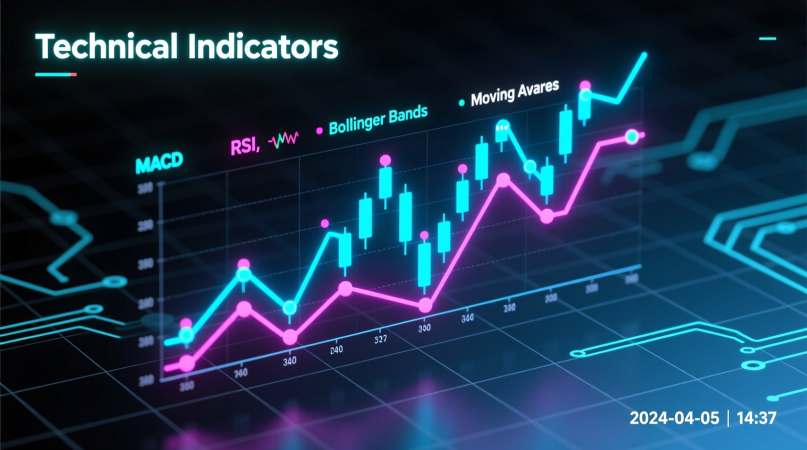
Technical indicators help analyze market trends and momentum:
- Moving Averages (MA): Smooth out price data to identify trends. Common types include SMA (Simple Moving Average) and EMA (Exponential Moving Average).
- Relative Strength Index (RSI): Measures if Bitcoin is overbought or oversold. A value above 70 indicates overbought conditions; below 30 suggests oversold.
- MACD (Moving Average Convergence Divergence): Shows trend direction and potential reversal points.
- Bollinger Bands: Highlight volatility and price range by placing bands around a moving average.
These tools help traders confirm trends, spot reversals, and make smarter trading decisions.
Step 4: Analyzing Market Sentiment
Market sentiment is influenced by news, social media, and global events:
- Positive news, such as institutional adoption, can drive prices up.
- Negative news, like regulations or exchange hacks, can trigger price drops.
Monitoring Bitcoin-related news and social media sentiment helps traders anticipate short-term price movements.
Step 5: Fundamental Analysis
Fundamental analysis examines long-term factors affecting Bitcoin’s value:
- Network activity (number of transactions and active addresses)
- Supply and demand dynamics
- Institutional investments
- Regulatory developments
Example: A surge in institutional adoption often signals a bullish trend for Bitcoin. Fundamental analysis complements technical analysis, providing a complete picture of market conditions.
Step 6: Combining Strategies
Successful Bitcoin traders combine technical and fundamental analysis:
- Identify long-term trends with fundamentals.
- Spot short-term entry and exit points using technical analysis.
- Adjust strategy based on market sentiment.
This combined approach increases accuracy and reduces unnecessary risks.
Benefits of Bitcoin Price Analysis
- Helps make informed investment decisions.
- Reduces the risk of emotional trading.
- Increases chances of profitable trades.
- Provides insight into market trends and cycles.
- Supports strategic planning for short-term and long-term goals.
- Enhances confidence for beginners navigating a volatile market.
- Identifies potential reversal points to optimize trading entries and exits.
Disadvantages / Risks of Bitcoin Price Analysis
- Analysis is not always 100% accurate.
- Market volatility can render predictions wrong.
- Over-reliance on technical tools may ignore market fundamentals.
- Emotional bias can affect interpretation of data.
- Requires continuous learning and monitoring.
- Can lead to overtrading if signals are misread.
Common Mistakes to Avoid
- Ignoring Market News: News impacts prices significantly.
- Overtrading: Reacting to every minor price movement can lead to losses.
- Neglecting Risk Management: Always set stop-loss orders.
- Following Others Blindly: Don’t copy trades without understanding the reasoning.
- Misinterpreting Indicators: Indicators should confirm trends, not predict them alone.
- Ignoring Fundamentals: Technical analysis alone may not capture macroeconomic events.
May be you like it:
Crypto Trading Tutorial- A Complete Guide for Beginners
Buy Bitcoin Step by Step- A Complete Beginner’s Guide
Crypto How To Guide- A Complete Beginner’s Guide to Getting Started
FAQs
1. What is the best time to analyze Bitcoin prices?
Bitcoin trades 24/7, but analysis during high liquidity periods (like overlapping US and European market hours) can provide more accurate insights.
2. How often should I perform Bitcoin price analysis?
For traders, daily or even hourly analysis is useful. Long-term investors can review weekly or monthly trends.
3. Can beginners do Bitcoin price analysis effectively?
Yes, by starting with basic charts, support/resistance levels, and simple indicators like moving averages.
4. Is Bitcoin price analysis foolproof?
No, it reduces risk but cannot guarantee profits due to market volatility.
5. Should I use technical or fundamental analysis?
Both are important. Technical analysis is better for short-term trading, while fundamentals help with long-term investment decisions.
6. Can market news affect technical analysis predictions?
Yes, unexpected news can override technical trends, making it crucial to monitor sentiment alongside charts.
7. What tools are recommended for Bitcoin price analysis?
TradingView, CoinMarketCap, and CoinGecko are popular for charting, technical indicators, and market data.
8. How can I avoid common mistakes in analysis?
Develop a strategy, set risk limits, combine technical and fundamental approaches, and avoid emotional decisions.
Expert Tips & Bonus Points
- Always track Bitcoin price alongside other cryptocurrencies to spot trends.
- Use multiple indicators for confirmation rather than relying on one.
- Keep a trading journal to record strategies, outcomes, and lessons learned.
- Avoid FOMO (Fear of Missing Out) by sticking to your strategy.
- Stay updated on regulatory news, as it can significantly impact price movements.
- Consider using automated alerts for key support, resistance, or indicator levels.
- Remember, patience and discipline are crucial in volatile markets.
Conclusion
Bitcoin price analysis is an essential skill for both beginners and intermediate traders. By understanding charts, indicators, support and resistance, market sentiment, and fundamentals, traders can make informed decisions that maximize profits and minimize risks.
While the cryptocurrency market is volatile, disciplined analysis and strategic planning provide a competitive edge. Avoid common mistakes, monitor trends, and combine technical and fundamental approaches to navigate Bitcoin’s unpredictable price movements.
Investing in knowledge through consistent practice, careful observation, and informed decision-making is the key to long-term success. With patience and a structured approach, Bitcoin price analysis can transform the way you trade, making your journey in the crypto market more strategic, profitable, and confident.
May be you like it:
Daily Crypto News: Stay Ahead in the Crypto World
Crypto Price Prediction- A Beginner’s Guide to Smart Forecasting
