


Introduction
Cryptocurrency trading has gained massive popularity in recent years, attracting beginners and experienced traders alike. However, the crypto market is extremely volatile, with prices capable of swinging dramatically in minutes. While the potential for profit is high, the risk of significant loss is equally real. This is where risk management in crypto comes into play.
Risk management is not about avoiding losses entirely—it’s about protecting your investments and making informed decisions. It helps traders stay disciplined, reduce emotional reactions, and increase the chances of long-term success. Without a proper risk management strategy, even the most promising crypto investments can lead to unexpected losses.
In this guide, we’ll break down everything you need to know about risk management in cryptocurrency trading. From understanding the basics to learning step-by-step strategies, you’ll gain practical knowledge that can be applied immediately. Whether you are a beginner or have some experience in crypto, mastering risk management is crucial for protecting your capital, maximizing profits, and navigating the unpredictable crypto market safely.
By the end of this article, you’ll have a clear roadmap for managing risk effectively, avoiding common pitfalls, and making smarter trading decisions.
What is Risk Management in Crypto?
Risk management in crypto refers to the strategies and practices used to minimize potential losses and protect your investment capital in the cryptocurrency market. It involves assessing, controlling, and mitigating risks before and during trading or investing.
Unlike traditional markets, cryptocurrencies are highly volatile. Prices can skyrocket one day and plummet the next. Risk management ensures that even if a trade goes against you, the loss is manageable.
Key components of crypto risk management include:
- Setting stop-loss and take-profit levels
- Diversifying your portfolio across multiple coins
- Controlling the size of each trade relative to your total capital
- Using tools like leverage cautiously
Essentially, risk management allows traders to survive and thrive in the unpredictable crypto environment. Without it, even experienced traders can face devastating losses.
May be you like it:
Crypto Investing for Beginners- Crypto Basics
Best Crypto Platforms- A Complete Guide for Beginners and Intermediate Traders
Crypto Tools Guide: The Ultimate Guide for Beginners
Why is Risk Management Important?
- Protects Your Capital – Capital is the lifeblood of trading. A strong risk management strategy ensures that you don’t lose more than you can afford.
- Reduces Emotional Trading – Fear and greed are the two biggest enemies in crypto trading. Risk management provides structure and discipline, preventing impulsive decisions.
- Enhances Long-Term Profitability – Successful crypto trading is not about winning every trade; it’s about consistency. Proper risk management improves your chances of sustaining profits over time.
- Manages Volatility – Cryptocurrency prices can change rapidly. By controlling your exposure, you minimize the impact of sudden market swings.
- Builds Confidence – Knowing you have a plan in place allows you to trade more calmly and make rational decisions.
In short, risk management is the foundation of responsible and effective crypto trading.
Detailed Step-by-Step Guide to Risk Management in Crypto
Step 1: Determine Your Risk Tolerance
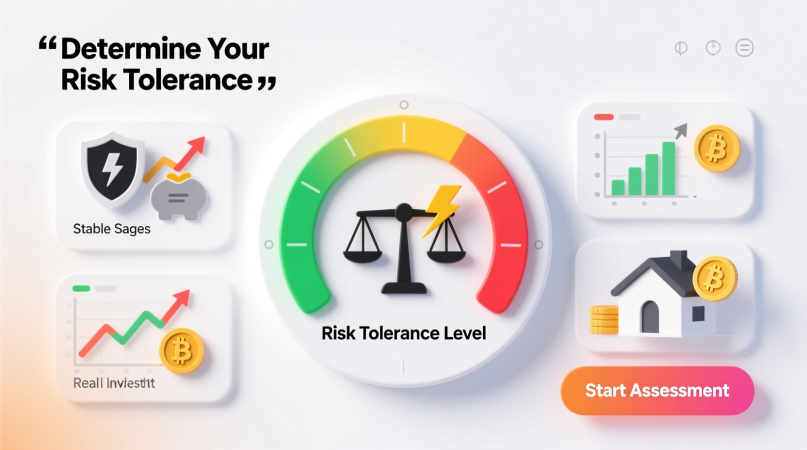
Before trading, ask yourself: “How much am I willing to lose on a single trade?” This depends on your capital, experience, and personal comfort level.
- Beginners should risk no more than 1–2% of their total capital per trade.
- Experienced traders may take slightly higher risks but should always avoid putting too much at stake.
Step 2: Use Stop-Loss Orders
A stop-loss order automatically sells your asset when it reaches a specific price. This prevents large losses and protects your capital.
- Example: You buy Bitcoin at $30,000. You set a stop-loss at $28,500. If the price drops to $28,500, your position automatically closes.
Step 3: Diversify Your Portfolio
Never put all your funds into a single cryptocurrency. Diversification spreads risk across multiple assets.
- Example: Instead of investing $10,000 in one coin, invest $4,000 in Bitcoin, $3,000 in Ethereum, and $3,000 in other altcoins.
Step 4: Use Position Sizing
Position sizing means adjusting the size of each trade based on risk tolerance.
- Formula: Trade Size = (Account Size × Risk Percentage) ÷ Stop-Loss Distance
- This ensures no single trade can significantly damage your overall portfolio.
Step 5: Avoid Over-Leveraging
Leverage can amplify profits, but it also increases losses. Beginners should avoid leverage until they fully understand its risks.
Step 6: Keep Track of Your Trades
Maintain a trading journal to record:
- Entry and exit points
- Reason for entering the trade
- Profit or loss
- Emotional state during trading
Analyzing past trades helps identify mistakes and improve strategies.
Step 7: Monitor Market Conditions
Stay informed about:
- Regulatory news
- Market trends
- Major announcements from crypto projects
Being aware of market conditions allows you to adjust your strategy and reduce risk.
Step 8: Use Risk-Reward Ratios
Aim for trades where potential profit outweighs potential loss. A common ratio is 2:1, meaning the potential gain is twice the potential loss.
- Example: If risking $500, aim for a profit of $1,000.
Benefits of Risk Management in Crypto
- Protects your capital from significant losses
- Reduces emotional trading mistakes
- Improves decision-making and trading discipline
- Increases long-term profitability
- Helps survive market volatility
- Builds confidence in your trading strategy
Disadvantages / Risks of Poor Risk Management
- Potential for large financial losses
- Emotional stress and impulsive decisions
- Reduced long-term profitability
- Increased vulnerability to market crashes
- Risk of losing entire trading capital
- Difficulty maintaining consistency
Common Mistakes to Avoid
- Ignoring Stop-Losses – Never trade without a stop-loss in place.
- Over-Leveraging – High leverage can wipe out your account quickly.
- Putting All Funds in One Coin – Avoid concentrating your investment in a single asset.
- Trading Based on Emotion – Fear and greed lead to poor decisions.
- Neglecting Research – Always analyze trends and news before trading.
- Chasing Losses – Trying to recover losses by making bigger trades often backfires.
May be you like it:
Crypto Trading Tutorial- A Complete Guide for Beginners
Buy Bitcoin Step by Step- A Complete Beginner’s Guide
Crypto How To Guide- A Complete Beginner’s Guide to Getting Started
FAQs About Risk Management in Crypto
1. What is the best risk percentage per trade?
Beginners should risk 1–2% of their total capital per trade. Experienced traders may go up to 5%, but controlling risk is key.
2. Can stop-loss orders guarantee no losses?
No. Stop-loss orders limit losses but cannot eliminate risk entirely, especially during sudden market gaps.
3. How do I diversify my crypto portfolio?
Invest in multiple cryptocurrencies, including stablecoins, major coins like Bitcoin and Ethereum, and a few promising altcoins.
4. Is leverage safe for beginners?
Leverage increases potential profits but also losses. Beginners should avoid leverage until they fully understand it.
5. What is a risk-reward ratio?
It’s the ratio of potential profit to potential loss. A ratio of 2:1 means you aim to gain twice as much as you risk.
6. How often should I review my risk management strategy?
Regularly. Monitor trades daily or weekly and adjust strategies based on market conditions and past performance.
7. Can risk management prevent emotional trading?
Yes. Having clear rules like stop-losses, position sizing, and risk limits reduces impulsive decisions.
Expert Tips & Bonus Points
- Always keep a portion of your portfolio in stablecoins to reduce volatility risk.
- Don’t invest money you cannot afford to lose.
- Combine technical and fundamental analysis to make informed trades.
- Use dollar-cost averaging for long-term investments to reduce timing risk.
- Consider using trailing stop-losses to lock in profits while allowing room for growth.
- Regularly update your trading journal and learn from mistakes.
Conclusion
Risk management in crypto is not optional—it’s essential for anyone serious about trading or investing. It protects your capital, reduces emotional decision-making, and increases your chances of long-term success. By setting stop-losses, diversifying your portfolio, controlling position sizes, and avoiding common mistakes, you can navigate the volatile crypto market with confidence.
Remember, successful trading is not about winning every trade; it’s about consistency and protecting what you have. By implementing strong risk management strategies, even beginners can trade safely, reduce losses, and gradually build wealth in the cryptocurrency market.
Start small, stay disciplined, and always prioritize managing risk over chasing quick profits. Over time, this approach will give you a solid foundation for sustainable crypto trading success.
May be you like it:
Daily Crypto News: Stay Ahead in the Crypto World
Crypto Price Prediction- A Beginner’s Guide to Smart Forecasting
